History of the Wexford postal service
George Griffith’s 1877 book ‘Chronicles of County Wexford’ documented a century of change in the county’s postal service, from three post offices in 1777 to 56 by 1877.
Page 4 of 5
George Griffith’s 1877 book ‘Chronicles of County Wexford’ documented a century of change in the county’s postal service, from three post offices in 1777 to 56 by 1877.
Rathaspeck Church holds the grave of United Irishman Cornelius Grogan, executed in 1798. The church closed in 1971 but received a €100,620 restoration grant in 2025.
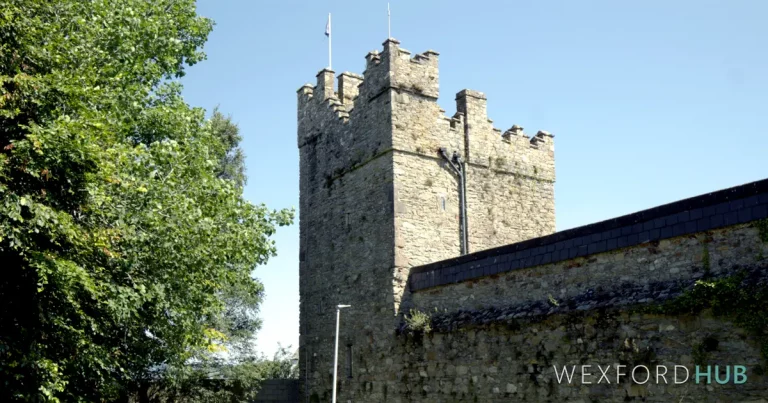
Westgate Tower is actually Selskar Gate, a private 13th-century gateway to Selskar Abbey. It is the town’s only surviving medieval gateway.
A 2.2-magnitude earthquake struck County Wexford on 18 March 2014, with locals initially attributing the tremor to passing trucks. A similar event had occurred in 1892.
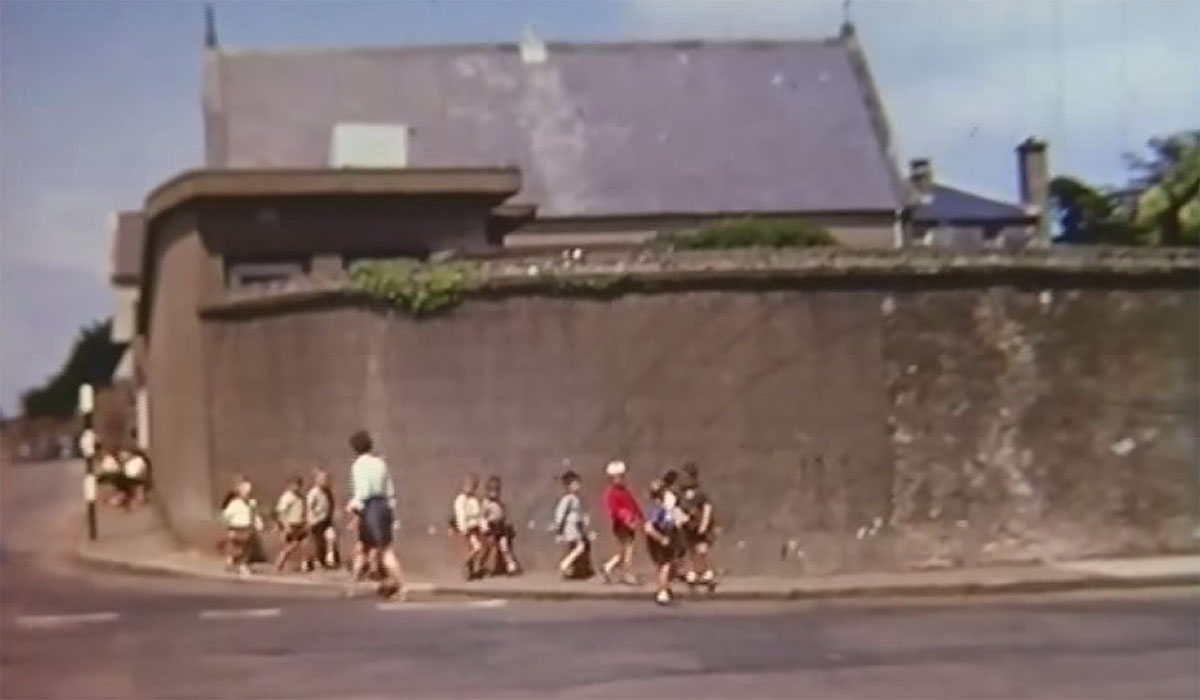
Old footage from 1968 or 1969 shows school children crossing Summerhill in Wexford Town. The video was recorded by artist Betty Forde at a time when a Mercy Convent primary school operated in the area.
The Bullring in Wexford Town was named after the blood sport of bull-baiting, introduced by the Guild of Butchers in 1621.
Spawell Road is a 1 km stretch running from Carcur to the roundabout at the bottom of Hill Street.
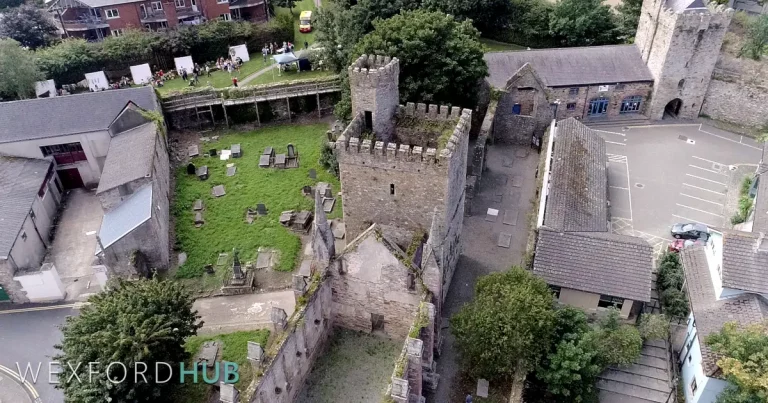
Selskar Abbey is a ruined medieval abbey in Wexford Town. The first Anglo-Irish treaty was signed at the location in 1169.
The ruins of St. Patrick’s Church in Wexford Town date back to medieval times. Its graveyard contains victims of Cromwell’s 1649 sacking and the headless body of United Irishman John Henry Colclough.