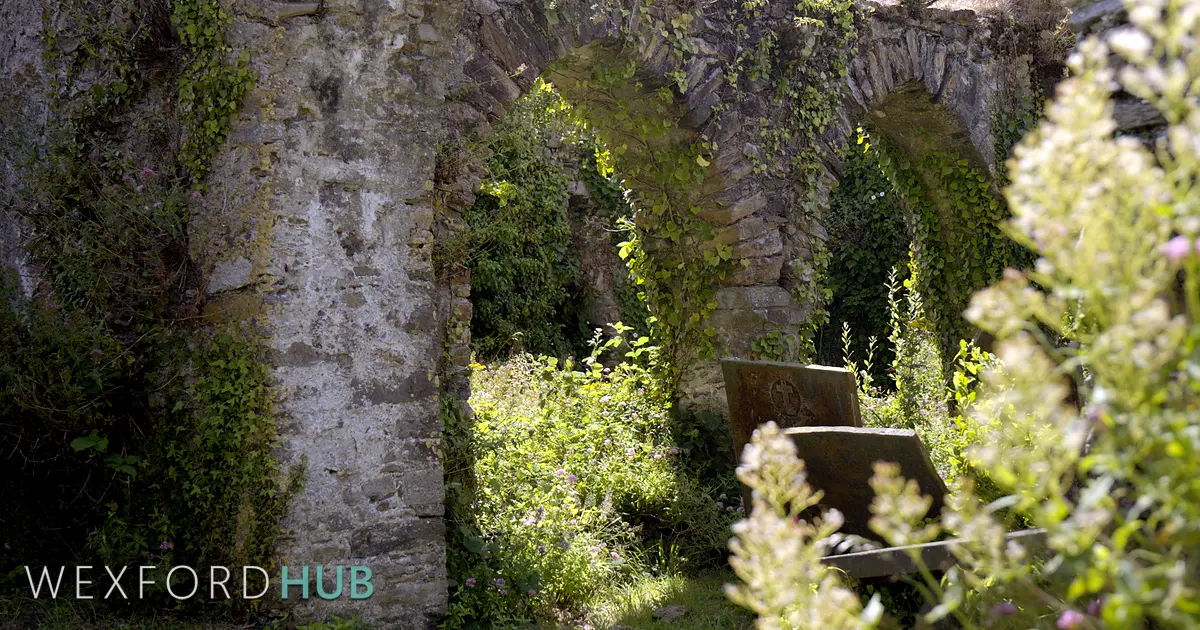
Wexford Town once contained six intra-mural graveyards: St. Patrick’s, Selskar, St. John’s, St. Mary’s, St. Michael’s, and St. Magdalen’s. Attached to the town’s medieval parish churches, these burial grounds served the local population for centuries before overcrowding and public health concerns led to their closure in 1901.
The struggle between the Wexford Corporation and the Local Government Board over their fate spanned more than two decades and drew in Members of Parliament, medical inspectors, and the public.
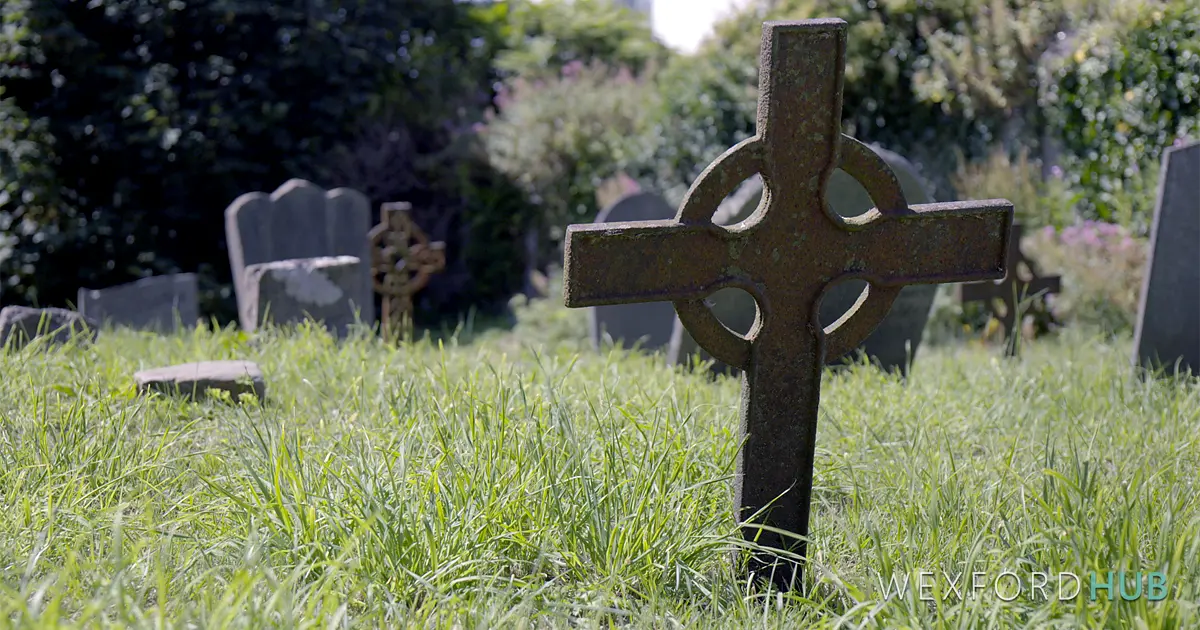
The town had several graveyards
The large number of burial grounds reflected Wexford’s complex history.
Norse Wexford, dating from the 9th to the 10th century, contained the parishes of St. Doologue’s, St. Mary’s, and St. Patrick’s. The churches of the Holy Trinity, St. Michael’s, St. Brigid’s, and St. Peter’s were located just outside the town.
St. Magdalen’s at Maudlintown was established as a leper hospital outside the town walls, as lepers were not permitted within the town.
After the Anglo-Norman arrival in the 12th century, additional churches were founded: St. Selskar’s, St. Iberius’, St. John’s, and the Franciscan friary.
Overcrowding
By the late 19th century, centuries of continuous burial had left these graveyards severely overcrowded, prompting growing concern about public health.
The Wexford Corporation had first grappled with the issue as early as June 1873, when it met to consider closing the town’s existing burial grounds and acquiring land for a new cemetery outside the municipal boundary. The meeting ended without resolution after a large crowd disrupted the proceedings.
By the 1880s, the Local Government Board was pressing Wexford to provide a new cemetery.
A government inspector reported that the existing graveyards were “generally full, badly kept, overcrowded in some places and overgrown generally with weeds.” The inspector noted there was no check on grave depth and that human remains appeared buried too close to the surface in some instances.
The Board warned that, even with the greatest care, the graveyards would become “worse and worse, year by year,” posing a dangerous risk of disease.
Crosstown
By 1890, the Local Government Board approved a loan of £1,300 for the purchase of land for a new burial ground at Crosstown, repayable over fifty years.
On 1 May 1892, the Bishop of Ferns consecrated the Catholic portion of the new cemetery. Two years later, it became operational.
Despite the new cemetery, many families continued to bury their dead in the older intra-mural graveyards.
Later that year, authorities reported that burials at the sites were not complying with legal depth requirements, with concerns raised regarding shallow graves and their implications for public health.
Closures
In February 1900, the Local Government Board’s Medical Inspector, Dr Edgar Flinn, conducted a public inquiry into the condition of the graveyards. During the inquiry, the Corporation opposed compulsory closure and argued that existing rights of interment should be preserved.
Dr Flinn’s report concluded that the graveyards had “grave elements of peril” to the health of the town. The Board declared that permitting any additional bodies to be buried there would involve “a dangerous responsibility” they were not prepared to undertake.
The Corporation strongly protested the closures, arguing they inflicted needless hardship on townspeople who held ancestral burial rights. It proposed that the graveyards remain open for another 30 years for anyone currently over the age of 30, with a strict system of inspection to ensure graves were dug deep enough.
The Board rejected this proposal, insisting the health risks were too great.
It ordered that all intra-mural burials cease after 30 September 1901.
The Corporation sought exemptions for individuals already possessing burial rights and also sought assistance from MP John Edward Redmond in making representations to the Chief Secretary.
In October 1901, the Board rejected the request for broad exemptions, stating that public health considerations required closure. However, to alleviate hardship, it agreed to reserve burial rights for specific cases such as allowing a widow or widower to be interred with their deceased spouse, provided there was sufficient room in the grave.
Attempted reopening
In 1927, the Corporation considered reopening the town graveyards for new burials due to sentimental attachment from older residents. However, the Medical Officer of Health issued a report warning that such a move would pose a severe danger to public health and would inevitably lead to the desecration of human remains. The report concluded that the soil in each graveyard was “saturated with animal matter undergoing slow decomposition.”
In 19th- and early 20th-century medical terminology, “animal matter” was the standard term used to describe decomposing human remains.
The decay was still actively occurring decades after the closures because the sheer density of burials had disrupted the normal process of decomposition.
The earth was so compacted and saturated with fluids that it became an airless vault. Without oxygen, the bacteria needed to break down tissue could not survive, leaving the bodies in a state of prolonged putrefaction.
The report noted that the accumulation of decomposing remains had caused the grounds to rise “many feet” above their original levels. The graveyards were surrounded by houses, which prevented natural ventilation that might have diminished the hazardous conditions.
Faced with this report, the Corporation abandoned the idea of reopening the sites.
All information sourced from newspaper archives and minutes of meetings from the Wexford Corporation and Wexford County Council.