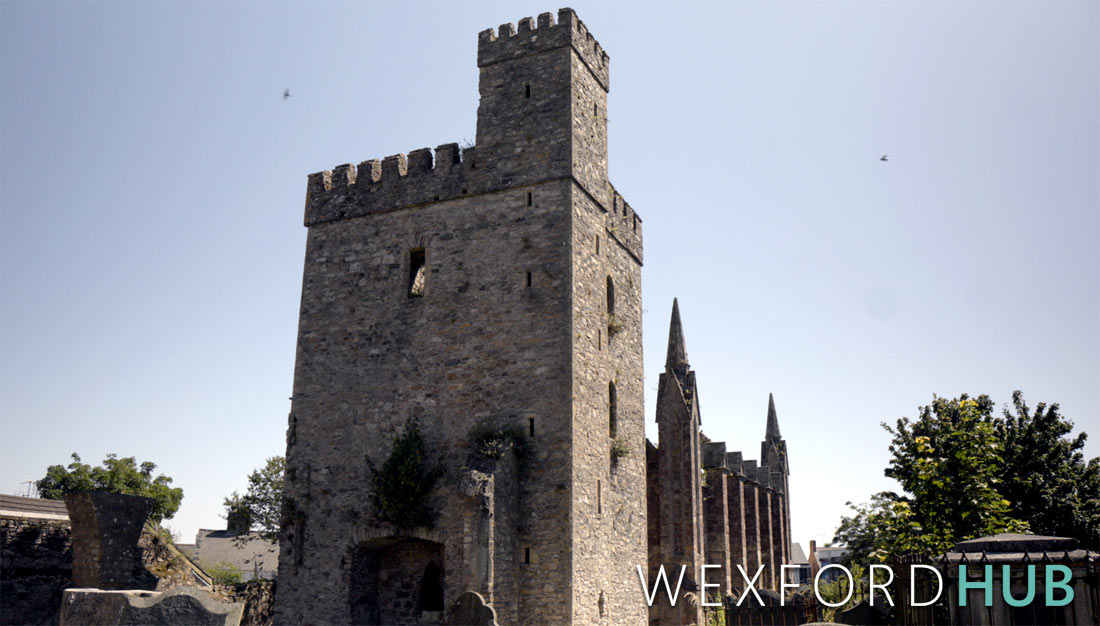
Selskar Abbey, a ruined medieval priory in Wexford Town, was the site of an incident in the 1830s involving a sailor that raised questions about premature burial.
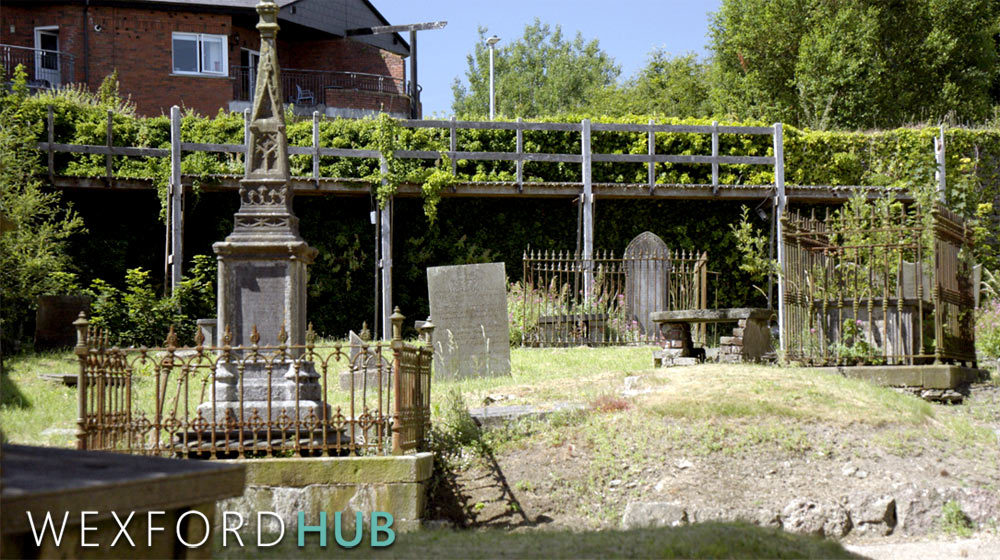
Around 1838, a sailor who died aboard a vessel in Wexford Harbour was buried there the day after his death. Children playing in the churchyard on the evening of the burial heard sounds coming from the newly made grave, according to a report in the Wexford People on 24 December 1858.
They ran home frightened and told their parents, and soon a crowd gathered. Those present dug down to the coffin and wrenched off the lid. Inside, they found the body turned face-down, with the shroud saturated in blood.
The article noted: “Whether the body had been turned by the carelessness of the bearers, during the funeral, or whether the man was actually alive when buried, has not been properly ascertained.”
The story touched on a fear that preoccupied 19th-century society: the prospect of being buried alive. The fear, called taphophobia, was widespread across Europe and cut across national boundaries.
Doctors and intellectuals debated the risk seriously. It was not dismissed as mere superstition. The concern gained traction in the later 18th century as part of Enlightenment thinking on the appropriate treatment of the human body.
Among those who could afford preventative measures, some requested the removal of their hearts or the opening of their arteries when declared dead. Safety coffins, first appearing in late 18th-century Germany, became increasingly intricate. A common design featured a rope attached to the hand of the corpse and connected to a bell above ground, allowing a person mistakenly buried alive to alert others.
Some coffins had glass lids or sides so onlookers could see if the person opened their eyes, and some included breathing tubes to allow the person to breathe until discovered. Undertakers advertised safety coffins, and various patents granted in the 19th century show that there was an ongoing concern about being buried alive.
The fear of premature burial was reflected not only in the design of safety coffins but also in the stories that filled 19th-century newspapers. The most common story was that of noises emanating from the coffin of a “dead” person.
On 2 August 1856, the Wexford People reprinted a report from the Cork Constitution that recounted a narrow escape from premature burial. A 24-year-old woman named Maryanne O’Brien had fallen ill and was sent to Carrignavar to recuperate. However, her illness worsened, and she later died.
When word reached her parents that she had passed away, preparations for her burial began and a large gathering assembled for the wake. The following morning, as mourners paid their final respects, movement was noticed in the coffin. Moments later, O’Brien suddenly sat upright, sending those present into panic.
According to the newspaper, her apparent death had in fact been a trance-like state, and she soon made a rapid recovery.
The theme also found expression in literature. Edgar Allan Poe expressed a personal fear of being buried alive and integrated this theme into several of his stories, most notably “The Premature Burial.” In that story, the first-person narrator suffers from catalepsy, periodic bouts of unconsciousness that could be misinterpreted as death. This leads to a dread of being buried alive, and the narrator remodels his grave with various contraptions to prevent premature burial.
Despite the cultural preoccupation with premature burial, no further reports about the sailor at Selskar Abbey ever appeared in local newspapers.