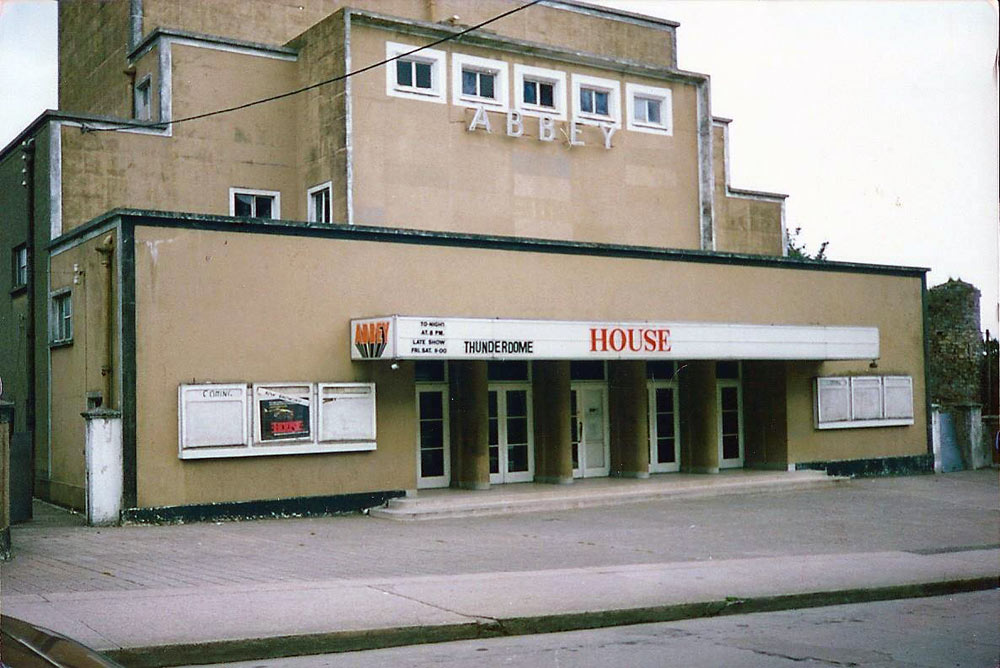
The Abbey Cinema opened in January 1947 and was considered one of the most modern cinemas in Ireland at the time. It stood on Upper George’s Street in Wexford Town until its demolition in 1994.
Built by Harry Wilson and Martin Breen, the Abbey Cinema had a seating capacity of 1,200. The opening night featured “The Seventh Veil” starring James Mason and Ann Todd. The opening-night projectionist was Pat Hayes, a Wexford photographer. Contemporary newspaper reports marvelled at the five entrance doors in the foyer and the terrazzo stairways fitted with chromium handrails.
Admission prices were set at 1/8d (one-eighth of a penny, or a farthing) for the balcony, 1/- (1 shilling, or 12 pence) for the parterre, and 4d (4 pence, or one-third of a shilling) for the wooden seats close to the screen, known as “scratch.”
The balcony was the cheapest section because it was the furthest from the stage. It offered poor visibility and inadequate ventilation. It also tended to trap heat and smoke from the theatre below. However, the ticket prices were low enough to make it accessible to working-class audiences.
Wexford Town already had two cinemas, the Capitol and the Cinema Palace, when the Abbey opened. Before the widespread arrival of television, cinema was a primary form of entertainment, and the three venues served the local population well. Across County Wexford, New Ross had two cinemas, while Gorey and Enniscorthy each had one.
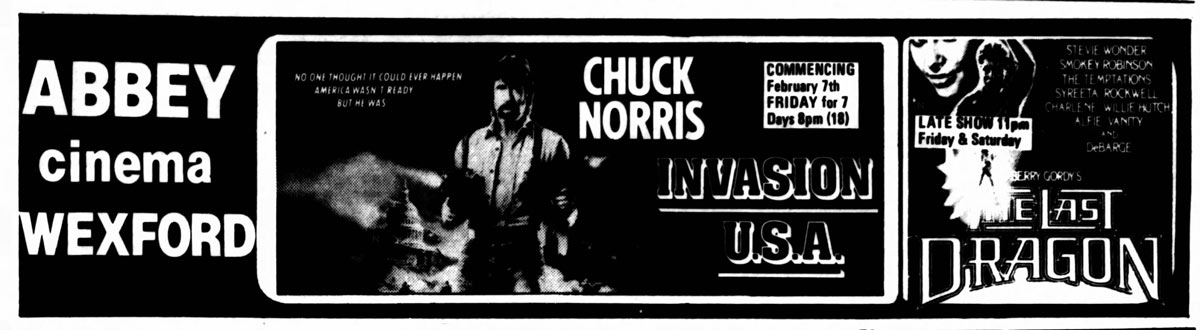
The norm at the Abbey was two shows per night, often comprising double bills. For popular releases such as “The Quiet Man” and blockbusters like “Gone with the Wind,” “Rocky IV,” and “King of the Kaiber Rifles,” four shows a day were necessary to meet demand. On Sunday nights, queues extended down George’s Street.
Throughout the 1950s and 1960s, it was regularly overflowing, often requiring wooden benches for spill-over demand.
Audience numbers declined in the 1970s. Local press reports attributed the downturn to the rise of television and changing social habits. The building’s deteriorating condition compounded the decline. Local newspapers described the cinema in its final years as a cold, dilapidated version of the magnificent facility it once was.
The Abbey served a social function beyond film screenings. Small red bulbs called “morality lights” dotted the side walls in the early days but became obsolete when the larger screen brightened the auditorium. When intervention was considered necessary, an usher would shine a torch on courting couples. On cold nights, the cinema provided an alternative “venue” for them. Many young people paid for balcony tickets and barely watched the film.
The films screened at the Abbey featured stars such as Clark Gable, Humphrey Bogart, and Judy Garland, whose performances drew audiences from across the county.
Mrs. Latimer remained the manager until the age of 86. She was eventually succeeded by Lena Bailey, who had joined the cinema as a kiosk attendant 39 years earlier.
The cinema sold ice-cream prepared on trays, and on Sunday evenings Bailey prepared the trays and worked in the foyer, rarely watching the films.
The Abbey closed on Thursday 10 September 1992. The last film was “Far and Away” starring Tom Cruise. The Wexford People described the closure as unceremonious, noting the quiet end of the cinema’s 45-year history. Nicky Fenlon, the projectionist, later removed the giant lettering over the front entrance.
At the time of its closure, Ward Anderson owned the cinema. The Savoy Cineplex opened on Redmond Place shortly afterward, effectively replacing it.
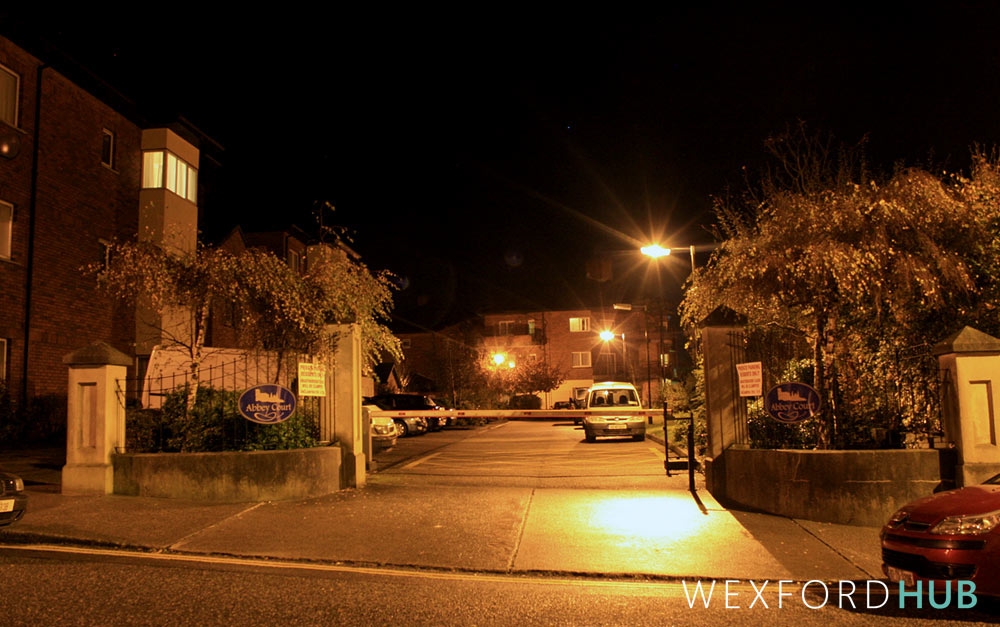
Wexford Corporation acquired the site for £190,000 in 1993, and the building was demolished in September 1994. The site was subsequently redeveloped as Abbey Court, a residential development, and a pedestrian walkway that links George’s Street with Selskar and Westgate Park.
In a letter to the local newspaper, resident Nicky Rossiter wrote:
“Last week I stood on George Street and watched as the walls of the old Abbey Cinema cracked and crumbled in a shower of dust. Looking at the demolition, I realised that more than bricks and mortar was disappearing in that dusty cloud. Although just about 50 years old, the Abbey was a focal point in many Wexford lives. How many marriages in the estates surrounding the town could trace their origins to the back rows of the Abbey?”
He ended the letter with:
“Now we bid farewell to another institution, and we thank everyone — staff and patrons alike — for years of entertainment on and off the screen. From the lady in the box office, always looking for exact money long before Dublin Bus expected it, to the man trying to bring order to a few hundred ‘canats’ with only a flashlight, thanks for the memories.”