Peter Street in Wexford Town is a small street that runs from St. Peter’s Square to South Main Street. It also connects with Mary’s Lane and St. Patrick’s Square.
It takes its name from the parish of St. Peter’s, one of the original Norse-Irish parishes in the town.
Throughout its history, the street has been known by other names, including Gibson Street and Gibson Lane, after William Gibson, who owned malt stores in the area, and Hay’s Lane, after Hay’s Castle.

Two medieval castles stood in the area: Hay’s Castle on Main Street, the urban seat of the Norman Hay family, and Wadding’s Castle at the junction of Patrick’s Lane and Peter Street. Both structures were reportedly demolished during the 19th century.
During the War of Independence (1919–1921), nationalist-controlled local councils across Ireland renamed streets to assert their independence from British rule. The Borough Council unanimously agreed to rename the street from Gibson Street to Peter Street on 1 September 1920, but the change was delayed because the required legal plebiscite of ratepayers had not been taken. A plebiscite was conducted in 1932, and on 6 June 1932, after the results showed sufficient support, the Council formally passed a resolution to legally alter the name to Peter Street.
Lowney’s School of Music also operated on Peter Street. By 1988, the shop had moved from the street to the newly opened Lowney Shopping Mall on South Main Street, but the School of Music remained on Peter Street.
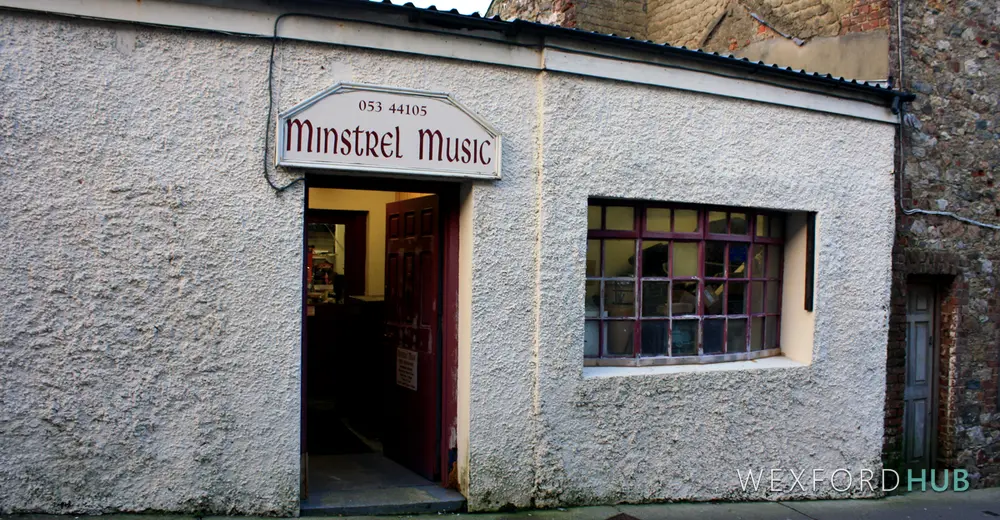
Several smaller lanes branch off Peter Street, each with its own history. The lane connecting Peter Street with St. Patrick’s Square and High Street is called Patrick’s Lane.

Historically, Patrick’s Lane also bore the name Foundry Lane, after Donnelly’s Foundry.
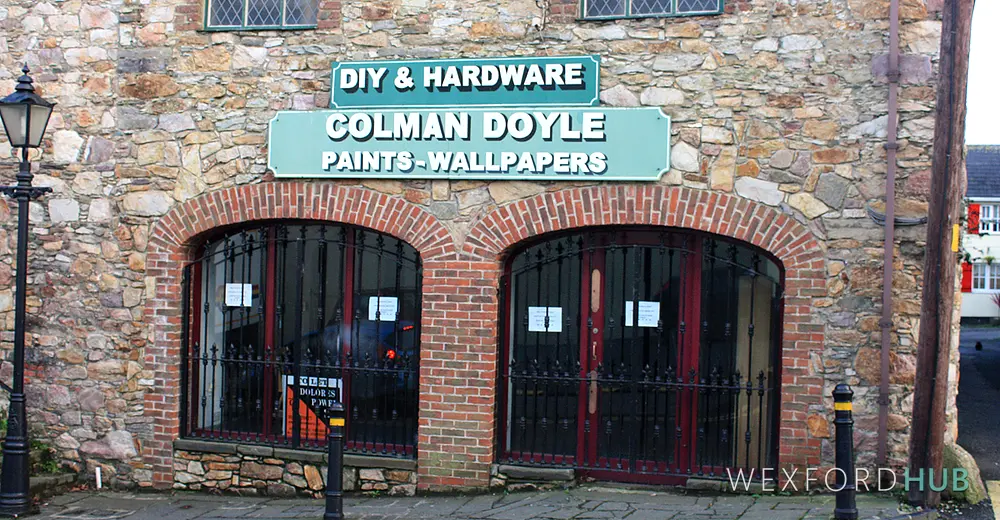
During the 19th and early 20th centuries, Peter Street was the centre of the corn trade in Wexford Town. Corn from the old malt houses was transported to the Guinness breweries in Dublin. Colman Doyle Homestores later owned the buildings. After the owner died in 2020, the estate administrators sold them at auction in September 2023.
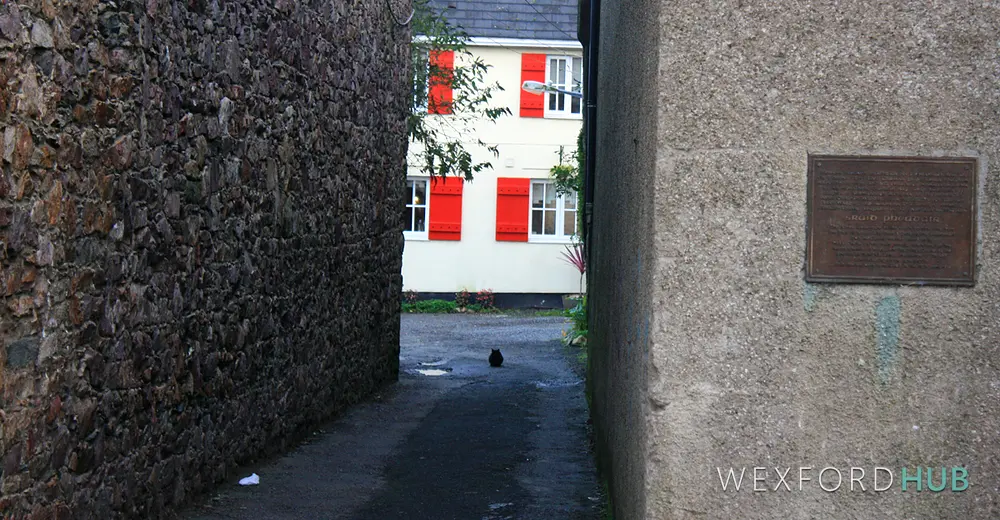
The street’s commercial importance was matched by its historic role at the edge of the town’s defences. Peter’s Gate once stood at the top of the street, near where it meets St. Peter’s Square. The gate was one of six gates in Wexford’s medieval town wall. In 1759, all the town gates were taken down. After the 1798 rebellion, they were re-erected in a plainer style, and they were finally removed by the Corporation in 1835.
Census
The 1901, 1911, and 1926 census returns offer a snapshot of life on the street.
1901
- Robert White: A 55-year-old car owner, White lived with his wife Ellen and their 17-year-old son Patrick, a general labourer.
- Mary Dempsey: Dempsey, a 40-year-old widow living on a pension, headed a household with her three young sons, James, John, and William.
1911
- The Power household: William Power (48), a house painter, and his wife Mary Jane (46) lived with nine of their children (aged 1-20). Their eldest son, John (20), worked as a house painter alongside his father, while James (15) was employed as a shop messenger. Also residing in the household were their daughter Maggie Hogan (22) and her husband Peter Hogan (25), a blacksmith. The census records that William and Mary Jane had fifteen children, thirteen of whom were still living.
- The Gough household: John Gough (47) and his wife Kate (45) lived with their six children. Also residing in the household was Kate’s father, Denis Callaghan (72), a widower and retired pedlar.
1926
- Francis Browne: A married labourer originally from Windsor, Browne lived with his wife Catherine, two daughters, and his mother-in-law.
Map
A map showing its location: