Westgate Tower is a medieval gateway in Wexford Town, close to the grounds of Selskar Abbey. Despite its common name, the structure is actually called Selskar Gate.
Sir Stephen Devereux built the tower in the 13th century on the instructions of King Henry III. It functioned as a toll gate, with an area for collecting tolls, cells for offenders, and rooms for guards. The “castle” at the top is a tower house that was likely added in the 1300s.
This entrance provided private access to the adjoining abbey. It allowed clergy members to bring goods into the complex without having to pay a toll.
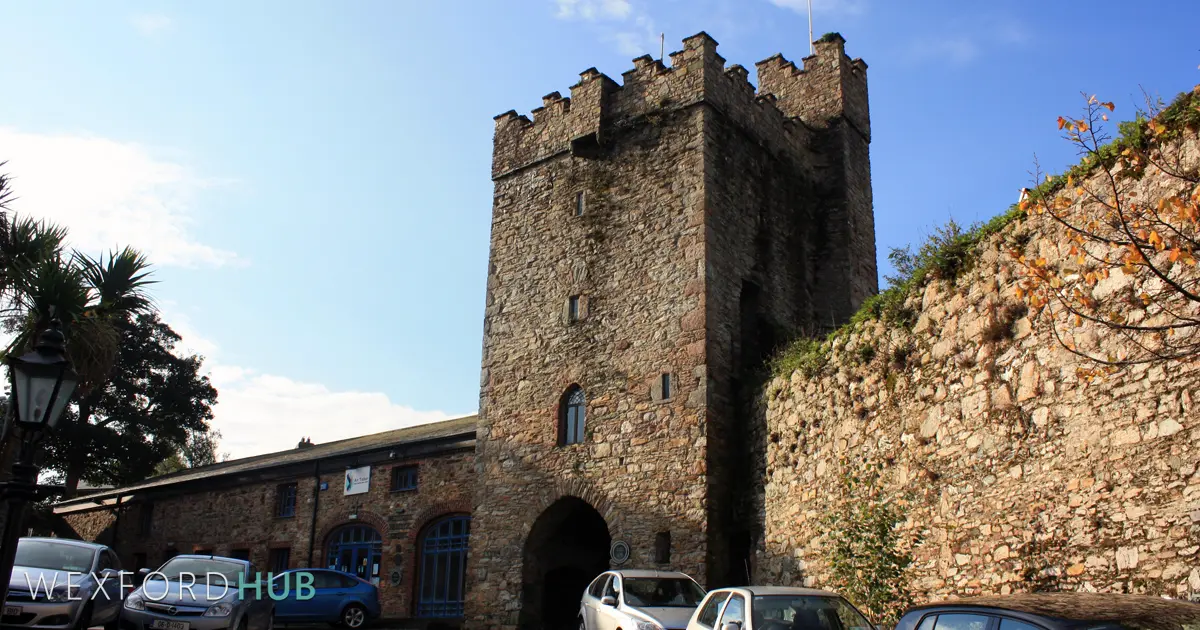
The tower that stands today did not provide public access to the town. Instead, it was part of the grounds surrounding the abbey, parts of which existed both inside and outside the wall.
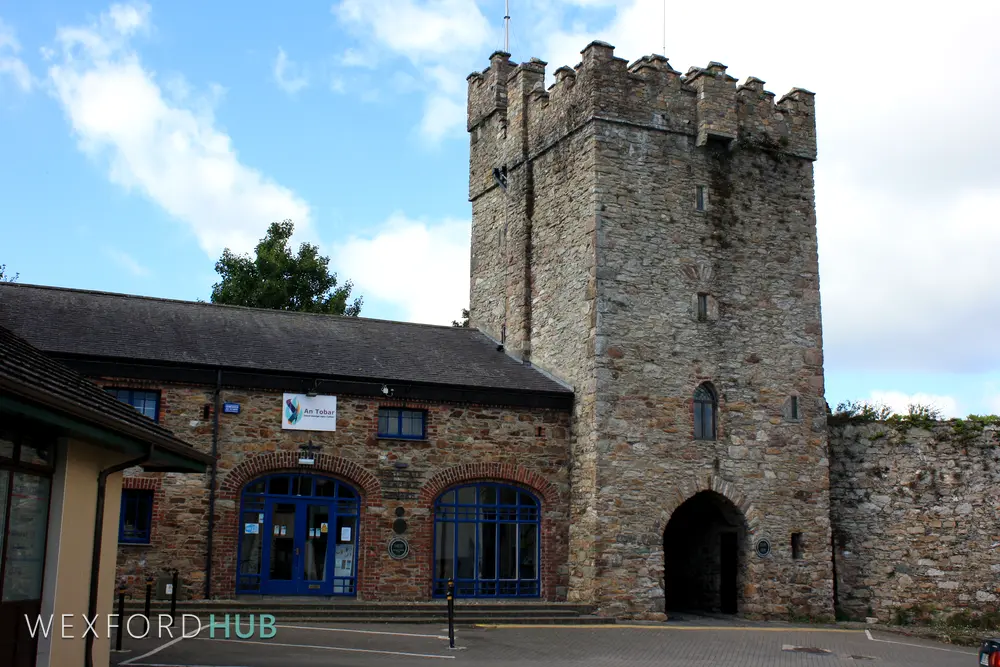
This large defensive wall was part of Wexford’s medieval town fortifications. The town wall consisted of six public gates and Selskar Gate. This entrance is the only surviving gateway. The public gates were demolished in the 1700s to facilitate the growth in traffic. Selskar Gate’s lack of street access likely saved it from a similar fate.
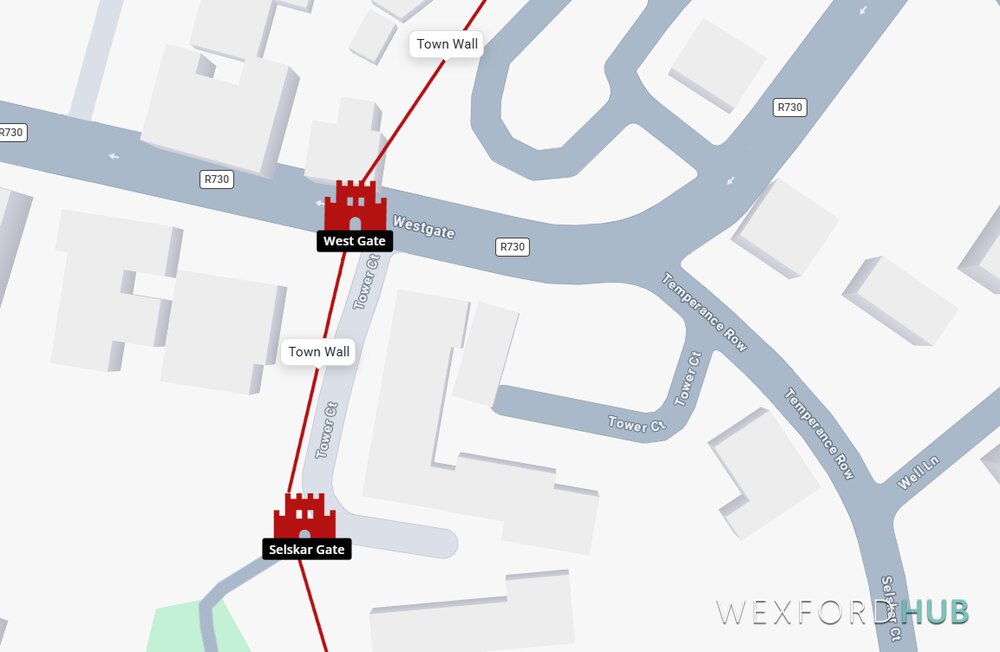
The original West Gate, also called Cow Gate, was a public entrance located less than 50 metres away on the current R730 regional road.
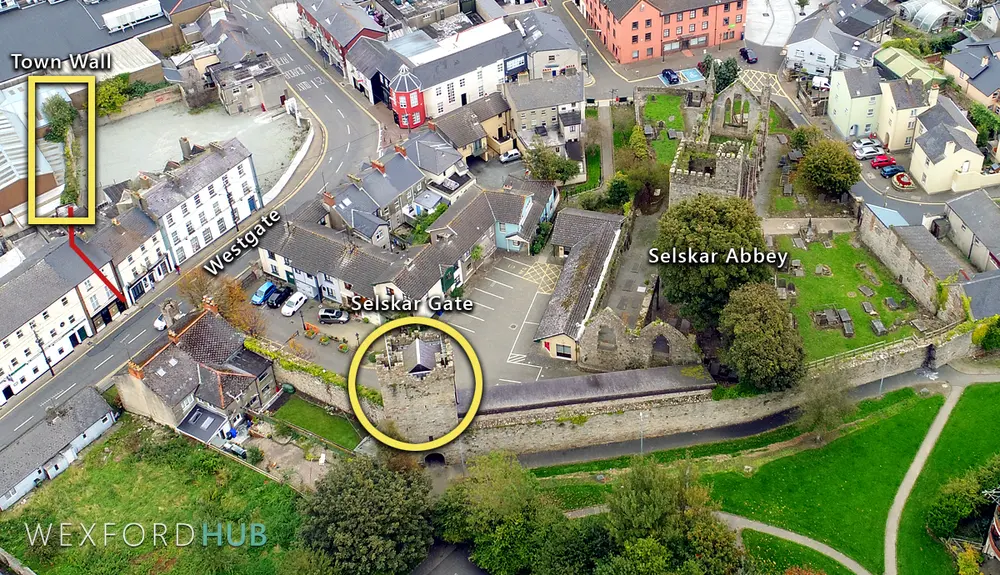
Following the removal of the original West Gate in 1759, the name lived on through the surrounding area and the street that still bears it today. In the years that followed, people increasingly began referring to the tower at Selskar Gate as West Gate. Over time, this alternative name became commonplace.
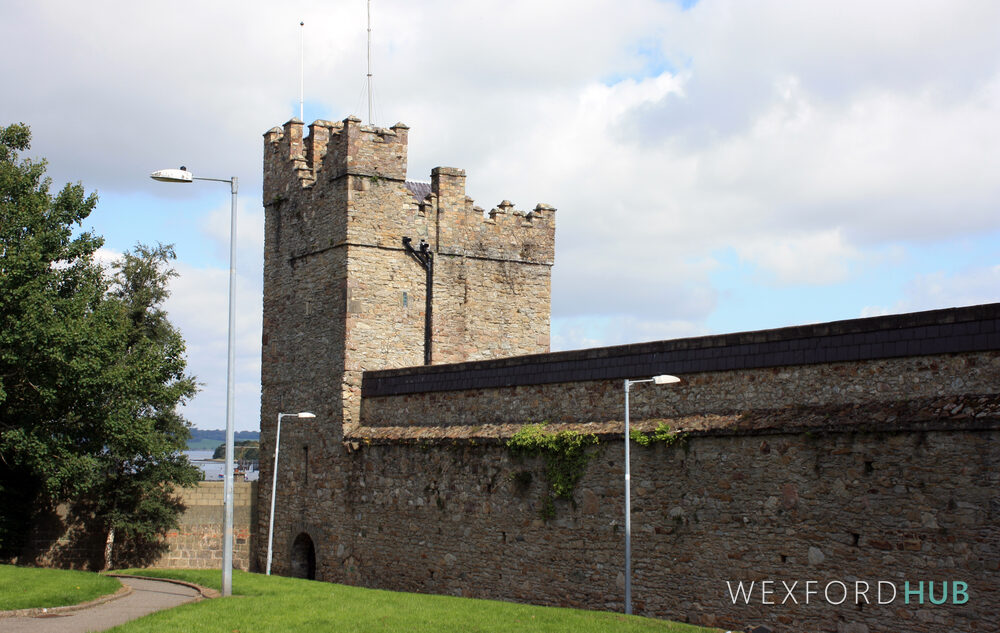
The gate was restored during the late 1980s. Before the work began, the top of the tower was in a poor state, as the battlements had been eroded and the walls were covered in ivy. It earned a Diploma of Merit from Europa Nostra in 1989, making it the only Irish project honoured that year. The award recognised outstanding quality in restoration design.

During the 1990s and early 2000s, the land outside the wall was cleared and redeveloped. Previously, the area consisted of a dirt path that wound through dense trees and overgrown thorn bushes. Wild shrubs were removed, and a pathway was installed before the area was opened to the general public.
Map
A map showing its location: