
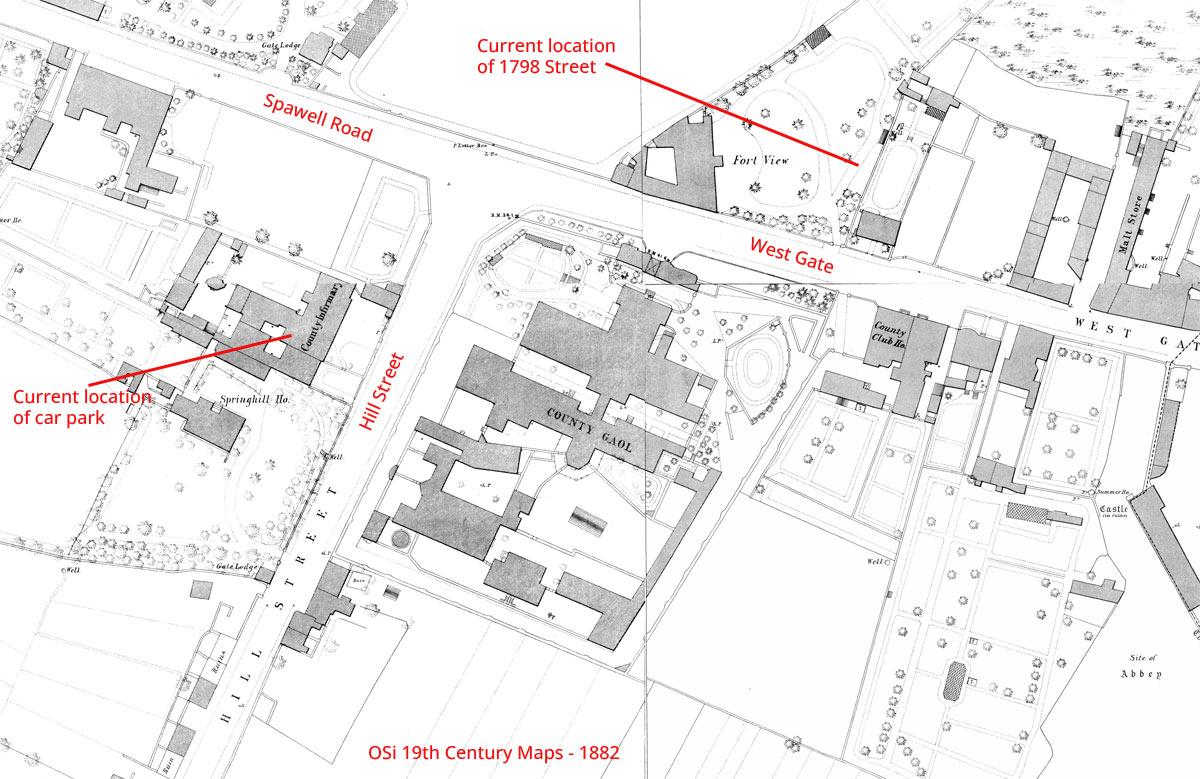
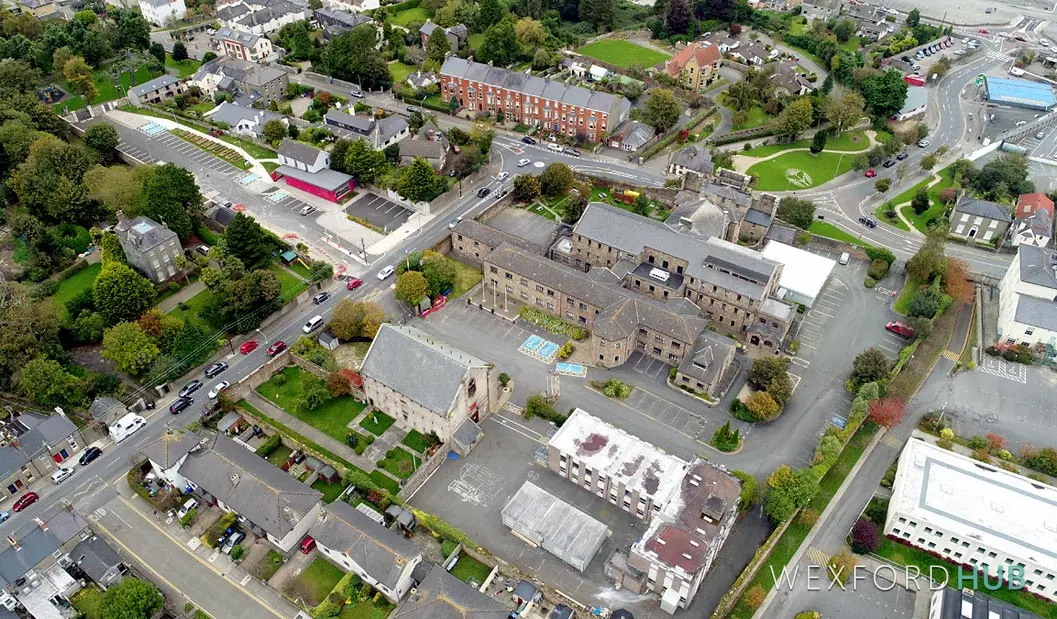
Wexford Gaol opened on Hill Street in 1812 and originally contained around 60 cells. It was surrounded by walls more than 20 feet high, with the prison grounds also incorporating 16 exercise yards.
A square in front of the building was used for public executions until the 1860s. During the 1840s, the prison was expanded with the addition of two hospital rooms, a kitchen, and a chapel.

Executions continued at the prison throughout the 19th century. The last civilian judicial execution took place in 1892, when Wicklow man Daniel Handley was hanged for the murder of Mary Anne Lyons. The choice of location for his hanging drew protests, including slogans such as “You can’t hang Wicklow men in Wexford!”
The event was held at 7.45am on Tuesday, 19 April, and drew a large crowd outside the prison grounds. According to reports from the time, Handley trembled violently before his execution, requiring prison guards to physically restrain him.
Although hangings were carried out at the prison, most inmates were imprisoned for petty crimes such as stealing, public indecency, and vagrancy.
One example from Irish prison records is Mary Sloane, who had multiple stays in Wexford Gaol. The Dublin native, who lived in Gorey during the 1880s, received sentences for drunkenness, disorderly conduct, and larceny. Other examples include:
- Joseph Nugent (29), from Duncormick, received a 7-day sentence for drunkenness.
- Mary Bolger (36), from Enniscorthy, was imprisoned for 7 days for indecent behaviour.
- Mary Lyons (18), from Gorey, served 14 days in Wexford Gaol for breaking glass.
- James Redmond (60), from Enniscorthy, received a 30-day sentence for stealing a saw.
A notable case involved two men from Bunclody, who were imprisoned for carrying arms at a tithe protest organised by the Right Boys. Their imprisonment in Wexford Town eventually led to the events of the ‘First Rebellion.’
The building ceased functioning as a prison in 1903 and remained vacant for several years. It subsequently reopened as St. Brigid’s Certified Inebriate Reformatory, a home for female inebriates run by the Sisters of St. John of God and commonly known as St. Brigid’s Centre. After its conversion, the walls around the gaol were reduced in height.

After the Irish War of Independence in 1921, the Free State government took over the gaol and used it as a military barracks.
On 13 March 1923, three anti-treaty IRA prisoners were executed outside the gaol. James Parle, John Creane, and Patrick Hogan had all been arrested for possession of firearms. A commemorative plaque in the Republican Garden of Remembrance shows the exact spot where the three men were lined up and shot by a firing squad.
The grounds later became offices for Wexford County Council and the Wexford District Court.
Map
A map showing its location: