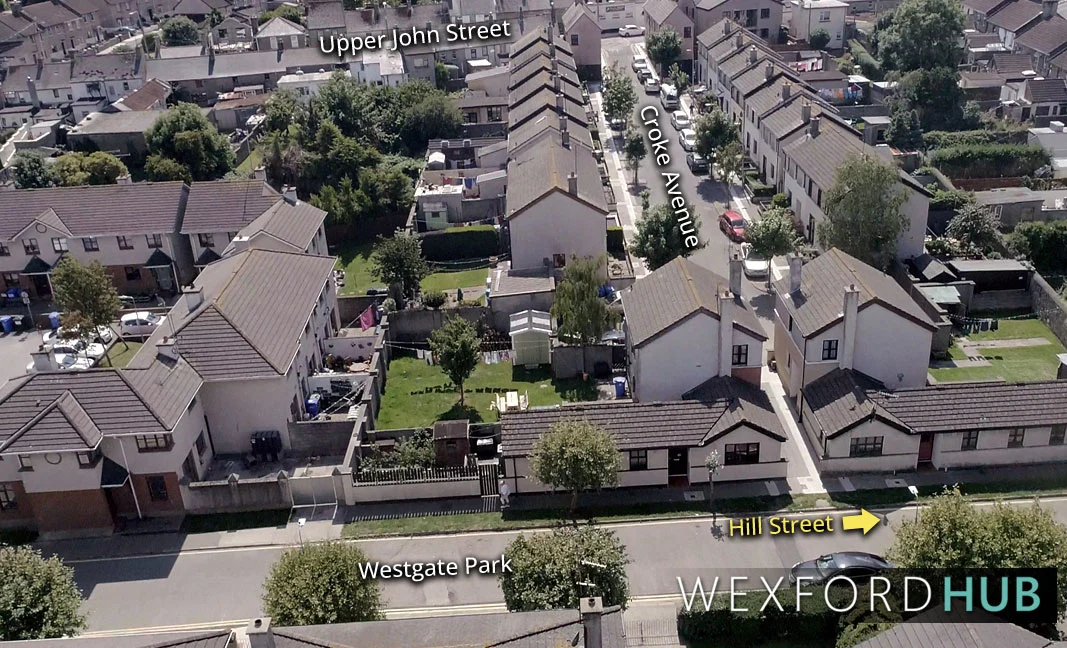
Croke Avenue is a residential cul-de-sac on Upper John Street in Wexford Town, close to the junction with Hill Street. Built in the early 1990s, it replaced an earlier Croke Avenue that had been condemned and demolished.
The name dates back to January 1933, when the Mayor of Wexford gave formal notice of his intention to name the “new avenue at Hill Street” as Croke Avenue.
The houses were used to rehouse families who had been displaced by slum clearance orders, specifically those transferred from condemned properties at Keyser’s Lane and Waterloo Road.
By 1936, all residents had been transferred to the new dwellings, and by the late 1930s the avenue was fully established.
Residents from the 1930s included Thomas Nolan, James Fogarty, Laurence Malone, Henry Dempsey, Fintan Morris, and Morris’ mother-in-law, “Mrs. Murphy.”
Minutes from the Wexford Corporation show that the “old Croke Avenue” faced numerous problems.
The front walls of the houses were initially too low, allowing cattle to jump over and trespass into gardens on Fair Days, prompting the borough surveyor to raise them.
Records from 1940 note a dispute between neighbours, with multiple tenants sending a joint letter complaining about the conduct of a specific resident, stating it was “impossible to live in the same neighbourhood with her,” and demanding she be transferred.
During the 1950s, and again in the 1970s, the houses were deemed structurally deficient and substandard. The borough surveyor presented the council with a list of major issues, including leaking roofs in the annexes, condensation affecting gas and electric meters, smoking chimneys, and cracked external and internal walls. Although the council authorized frequent repairs, the lack of funds was a recurring limitation.
Tenants could not legally purchase their homes from the local authority because they could not be brought up to the required statutory standard. The council formally passed resolutions calling on the Minister for the Environment to fix a “special low rent” for Croke Avenue (alongside Wolfe Tone Villas and Maudlintown).
Croke Avenue was condemned by Wexford Corporation in the late 1980s due to persistent structural deficiencies. The County Manager confirmed that statutory standards could not be met, and the council resolved to replace the houses. In 1989, the government allocated £124,000 for replacement housing.

Construction began in May 1990 on a new estate in the John Street backlands, designed by the National Building Agency. The initial scheme comprised 12 dwellings. Residents moved into their new homes shortly before Christmas 1990.
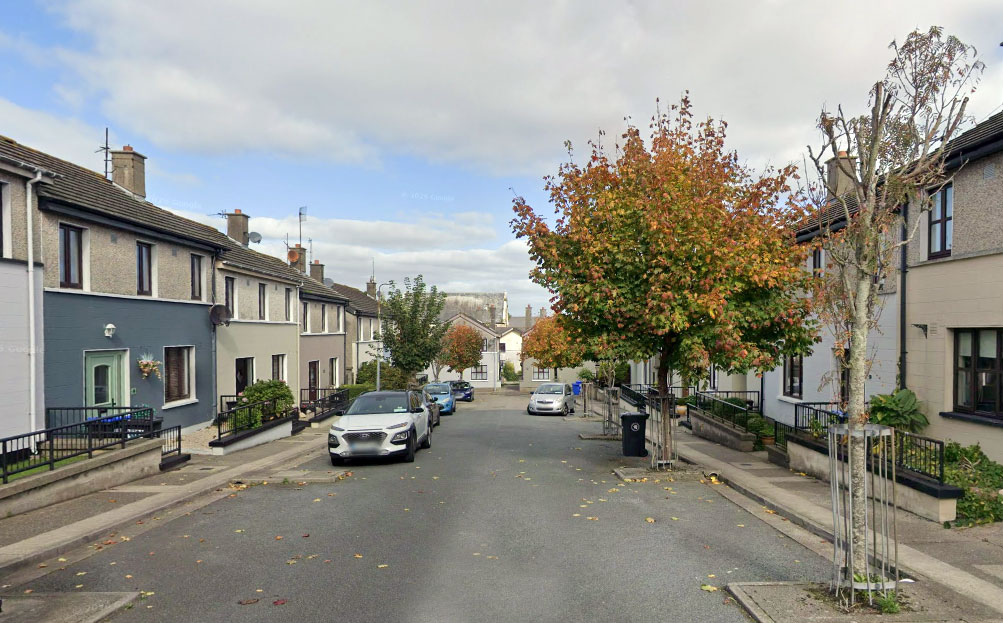
The new houses included a kitchen, sitting room, three bedrooms, and a bathroom, a significant upgrade from the old properties, which had only two bedrooms and a toilet “nearly in the kitchen.” Residents described their previous homes as “literally sinking” and “musty and damp,” while the new ones were “like palaces.”
Residents were given the choice of what to call their new estate. Some wished to keep the name Croke Avenue out of nostalgia, while others wanted a fresh start. A 1991 Wexford People article covering the dispute was titled “The street with no name.”
Town Clerk Don Curtin said the local authority was waiting for a majority decision and would not intervene. “At the end of the day,” Curtin said, “it will all come down to the Corporation, but we hope to be guided by them.”
Ultimately, residents opted to keep the name.
The new estate was officially opened on 27 May 1993 by Minister of State at the Department of the Environment, Emmet Stagg. He praised the development for keeping the community together and remarked on the vitality of Wexford.
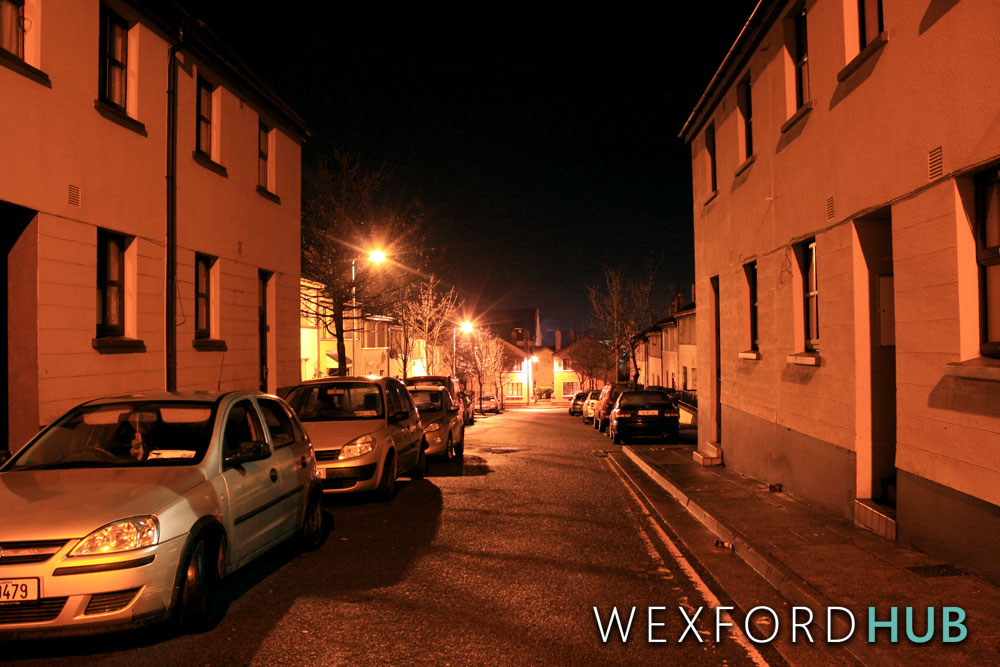
In 1996, Croke Avenue won the overall Design Award in a Department of the Environment competition for local authority housing. The adjudicators described the scheme as using “simple and unassuming forms carefully arranged on the site to create a well defined and secure urban space.” They noted the space was contained by “terraces of houses to each side, stepping gently with the slope” and “pairs of buildings at each end defining arrival and end points.” They added that “long narrow blocks of apartments define the new entrance road while protecting the sides of the existing houses on John Street.” The development was described as “an excellent example of carefully planned regeneration of a sensitive urban area.”
The land where the old Croke Avenue once stood was cleared. A larger estate called Westgate Park was built on the site, extending further south.
The southern end of Westgate Park was later connected to Westgate and Upper George’s Street via a pedestrian walkway near Selskar Abbey.
All information sourced from newspaper archives and minutes of meetings from the Wexford Corporation and Wexford County Council.
Map
A map showing its location: