On 7 May 1910, an 18-year-old Wexford woman named Mary Anne Wildes was found with her throat cut at an apartment in The Bullring.
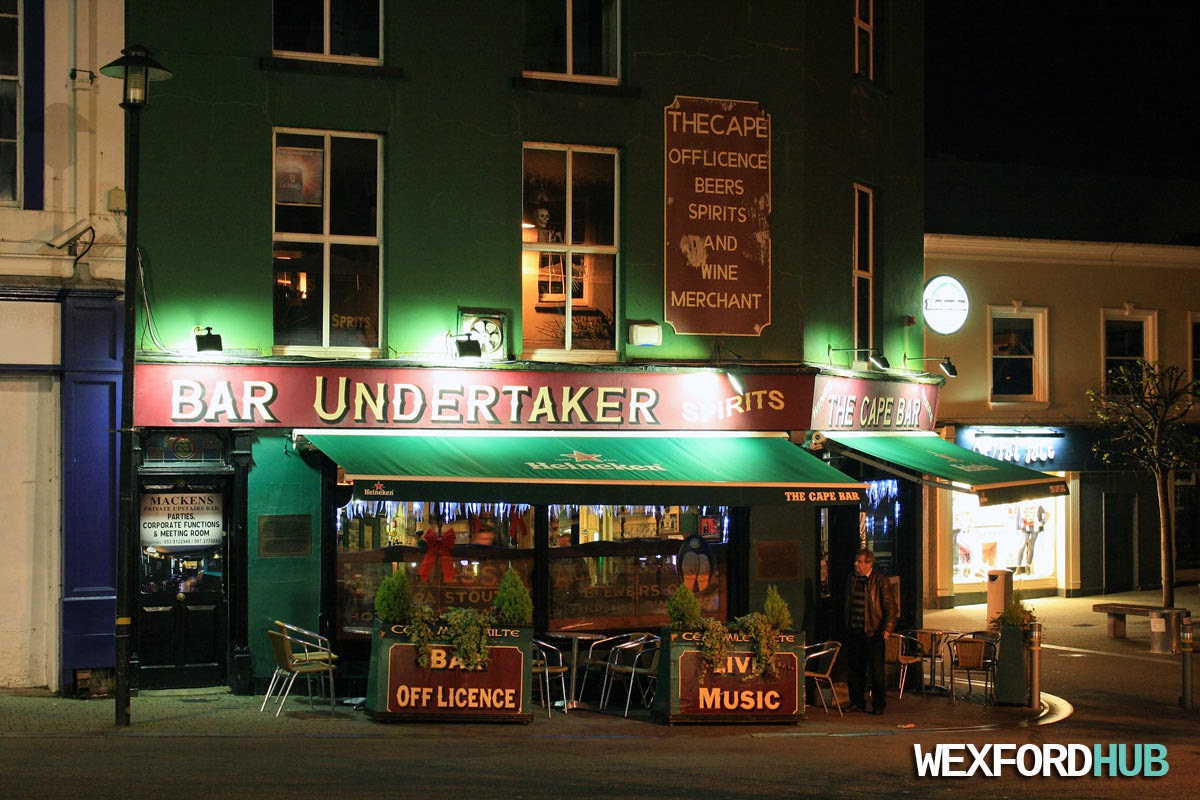
The apartment, situated above a bar called The Cape of Good Hope, was being rented by a 29-year-old man named Simon Bloom.
Bloom, a Jewish man of Polish origin, was a self-described artist known throughout Wexford Town for selling picture frames and photo enlargements. His family lived in the Clanbrassil Street area of Dublin, also known as “Little Jerusalem,” and on Armstrong Street in Harold’s Cross.
Wildes, who lived on Roche’s Terrace with her widowed mother, had worked for Bloom in the past, watching over his premises while he was away in Dublin.
According to witnesses, Bloom had fallen for Wildes. However, in the days leading up to the murder, she had become engaged to another man named Archie Wade. She had also refused Bloom’s request that she return and work for him. Wildes’ friend, Brigid Mary Power, later told the court that the victim felt “pestered” by Bloom.
On the morning of 7 May 1910, John Doyle and Thomas Lewis of Mary Street heard groaning inside the hallway leading to Bloom’s residence. After opening the letterbox and asking who was there, a voice replied, “Mary Anne.” Shortly afterwards, Bloom returned to the residence. While speaking with the two men, he attempted to direct suspicion away from himself by claiming he had left a man and a woman inside the apartment.
Upon opening the door, however, Bloom pushed past the injured Wildes and dashed towards the stairs, aiming to seal himself inside his apartment. At this point, the extent of Wildes’ injuries became clear, as blood gushed from a wound in her neck, staining her dress and the white rose she had been wearing. Lewis picked Wildes up in his arms and called out for a doctor.
Lewis placed Wildes into a handcart and pushed her to the infirmary on Hill Street. As she was being transported, bystanders watched in shock as others attempted to stop the bleeding by placing handkerchiefs over the wound on her neck.
When Wildes reached the infirmary, she was still conscious and able to name Bloom as her attacker. She also stated that Bloom had asked her to marry him. She never disclosed what her answer was.
Once word of the attack spread, an angry mob began to gather at The Bullring, demanding that the door of Bloom’s apartment be broken in. Police constables on the scene managed to contain the crowd until an officer obtained a key from the owner of the building.
When officers entered Bloom’s apartment, they found him sitting in a chair with a wound to his throat and a bloodstained letter in his hand, an apparent suicide attempt. Police took a bloodstained razor from the apartment as evidence and transported Bloom to the infirmary.
The letter, addressed “To those who would judge the scales of humanity and justice,” was rambling and unsigned. In it, Bloom wrote: “Are we cowards? We are not afraid; by love is conquered the fear of death. Are we insane? Is not the heart wiser, more godly, than the mind? Are we lawless? Are we not the slaves of our emotions and swayed by them like a cork in the ocean and as powerless to resist? Judge us by them all, those who understand and know the power of the feeling of love, jealousy, circumstances, and desperation. We are to be buried side by side, and it will not be well for those who disobey this our last, and dying wish. May God have mercy on all lost souls.”
The following day, authorities took Wildes’ deposition at the infirmary. According to her statement, Bloom had caused a three-inch wound to her neck after attempting to choke her. Bloom, who was present at the deposition, refused to cross-examine Wildes.
Later that day, at 10pm, Wildes died from her injuries.
Bloom spent two months recovering in the infirmary before his trial, which took place at Green Street Courthouse in Dublin on 1 December 1910. Dr David Hadden of the Hill Street Infirmary diagnosed Bloom as a monomaniac. The court declared Bloom insane and confined him to Dundrum Criminal Lunatic Asylum rather than a conventional prison.
After several years in the asylum, Bloom was released and emigrated to Chicago. There, he assumed a new identity and settled in the Chicago suburbs.