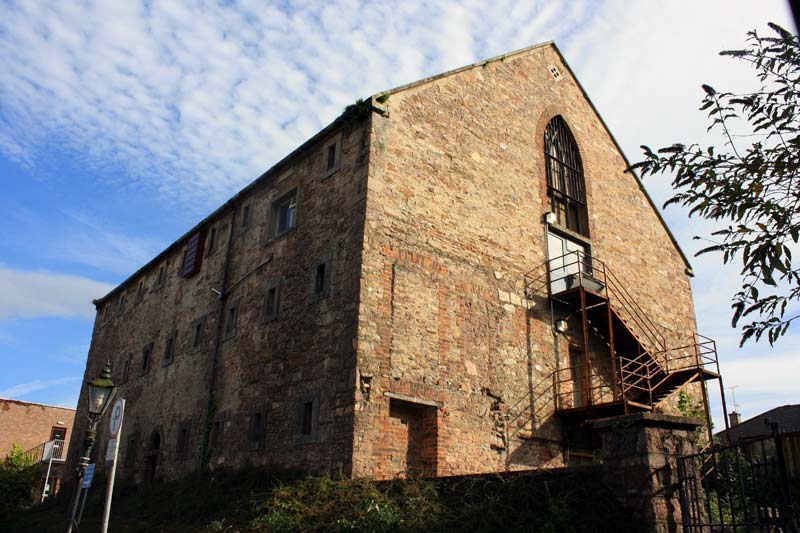
Irish prison records from the 1800s document crimes in County Wexford. Although many of the offences resemble those seen in modern news, the types of items stolen and the light sentences for petty crimes highlight the differences between the periods.
On 22 May 1883, James Shannon Jnr. assaulted Peter Ahearne of New Ross by throwing a “weight” at him. The judge ruled that Shannon had thrown the object with intent to inflict grievous bodily harm. He was confined to four days in prison.
A day later, on 23 May, Nicholas Whitty was arrested for threatening the life of John Whitty of New Ross, whom he attempted to assault with a shovel. He was confined to two days in prison.
Later that evening, at 9.15pm, Elizabeth Kelly was arrested after she was found in possession of a petticoat that belonged to a woman named Mrs Baldwin. Although the records do not state that Kelly stole the garment, they indicate she knew it had been stolen.
Other crimes from the same record sheet include:
- John Walsh, who was found in a drunken state.
- Michael Brien, Michael Nolan, and Andrew Treacy, who were arrested for stealing whiskey from a storage facility in the New Ross Workhouse.
- Patrick Dooley, who assaulted Edward Flynn of Mount Garrett, New Ross, and was confined to seven days in Wexford Gaol.
Not all offenders received light sentences. In April 1807, Peter and Michael Duffin were hanged at Windmill Hill, near the old Wexford Corporation building on Belvedere Road in Wexford Town. The two men had been convicted of highway robbery.
On 25 April 1882, James Kelly discharged a pistol filled with powder at James Carty and John Byrne, with intent to wound. Kelly, a bailiff’s assistant, was confined to four nights in prison before being bailed and discharged. He received four meals during his stay.
Other entries on the same record sheets include those detained on suspicion of vagrancy. Patrick Cullen (7), Anne Cullen (40), Andy Cullen (9), Mary Doyle (7), Dennis Doyle (14), and William Day (16) were detained on suspicion of being “strolling vagrants.” The term referred to homeless people who made their living by begging. They were tried before the Wexford Magistrate and confined for 24 hours.
Irish prison records indicate that most inmates were small and slender. On one sheet, the heaviest person recorded was John Walsh, who was noted as being 12.2 stone (77 kg) and 5 feet 8 inches in height. Walsh was arrested in August 1890 for “killing and carrying away a rabbit.” He was fined £2 and sentenced to 14 days in prison.
Many items stolen during this period were everyday goods that modern readers would take for granted. Examples include stockings, potatoes, bed sheets, and wheat. Patrick Murphy was sentenced to seven days in Wexford Gaol after he stole a “tin of ale” from Cherry’s Brewery in New Ross.
In a separate case, Edward Brien (30), a butcher, “assaulted, stabbed, and cut” James Murphy, Edward McGrath, and Bridgette McGrath. He was tried before Judge Morris on 24 March 1870 and sentenced to 18 calendar months in prison. His height was recorded as 5 feet 3 inches.
More incidents from the same crime sheet include:
- Patrick Byrne, who attempted to choke a policeman.
- Publican William Furlong (58) from Wexford Town, who sold alcohol on a Sunday during a prohibited hour.
- Patrick Griffin (30), who assaulted his wife.
- Thomas Murphy (14), who was given a 14-day sentence for stealing a half-sovereign coin.
On 18 September 1880, George Allen (50) and John Doyle (30) were arrested for “endeavouring to intimidate a witness.” According to records, Allen worked as a “nailourer,” a person who maintained the nails on a machine used to prepare cotton for weaving. Doyle was listed as a “pedlar” or “hawker,” an occupation that involved selling goods on the street.
In a separate case in 1879, Patrick Murphy (22) from Rathangan was tried for stealing trousers, a waistcoat, and a coat. He was 5 feet 9 inches tall with light brown hair and blue eyes, according to records. He was employed as a soldier in the 15th Regiment and was stationed in Duncannon Fort at the time.
In 1882, labourer Myles Kelly (32) from Gorey was sentenced to a month in prison for deserting his wife and child. On the same Register of Prisoners, Julian Allison (33) from Ballyduff, County Wexford, was tried for concealing the birth of her female child.
Throughout the period, most crimes involved drunkenness, begging, assault, vagrancy, and disorderly behaviour. Other reasons for detention included:
- Being a suspicious character.
- “Peeping” (i.e., being a “Peeping Tom”).
- “Buggery.”
The Irish Petty Sessions Court Registers also list several cases:
- In 1895, Thomas Byrne stood accused of threatening John Doyle with “provoking and aggravating language.” According to the case notes, the incident occurred in Enniscorthy and Doyle had feared for his own well-being.
- In 1901, publican Mary Kehoe received an objection against the renewal of her licence on the grounds that she was a “person of bad character.” The complainant argued that Kehoe had been convicted of drunkenness three times over the previous twelve months. The judge upheld the complaint and refused to renew her licence, noting that the defendant had a habit of being intoxicated on her own premises during working hours.
- In 1899, William Flynn (Templeshannon, Enniscorthy), John Redmond (Slaney Street, Enniscorthy), and William Black (Clohass, Enniscorthy) were called before the court for riding their bicycles on the footpath. They were all fined.
- On 25 May 1899, Thomas Kinsella of Templeshannon, Enniscorthy stole five empty sacks from John O’Reilly. O’Reilly later withdrew his complaint, leading to the dismissal of the case.
- 1909: Anne Hogan from Kilrush was brought before the Petty Sessions Court because her two children, Kate and Bridget Hogan, had not been attending school.
- In 1862, John Byrne from Abbeydown, County Wexford, was brought before the court for allowing one of his pigs to wander onto a public road. He was fined one shilling.
- In the same year, Elizabeth Connors was summoned for allowing her goat to wander onto a public road. She was fined one shilling.
- In 1895, Christopher Doyle (Templeshannon) brought Patrick Doyle (Templeshannon) to court for damage he had caused to his timber shed. The cost of the damage was estimated at 8 shillings.
Nicky Rossiter’s book, The Little Book of Wexford, records the case of Nicholas Kinsella, who was charged with “furious driving of a horse and cart laden with fowl, at Cornmarket, Wexford, causing people to flee for their lives on a public street.” He was fined 10 shillings.