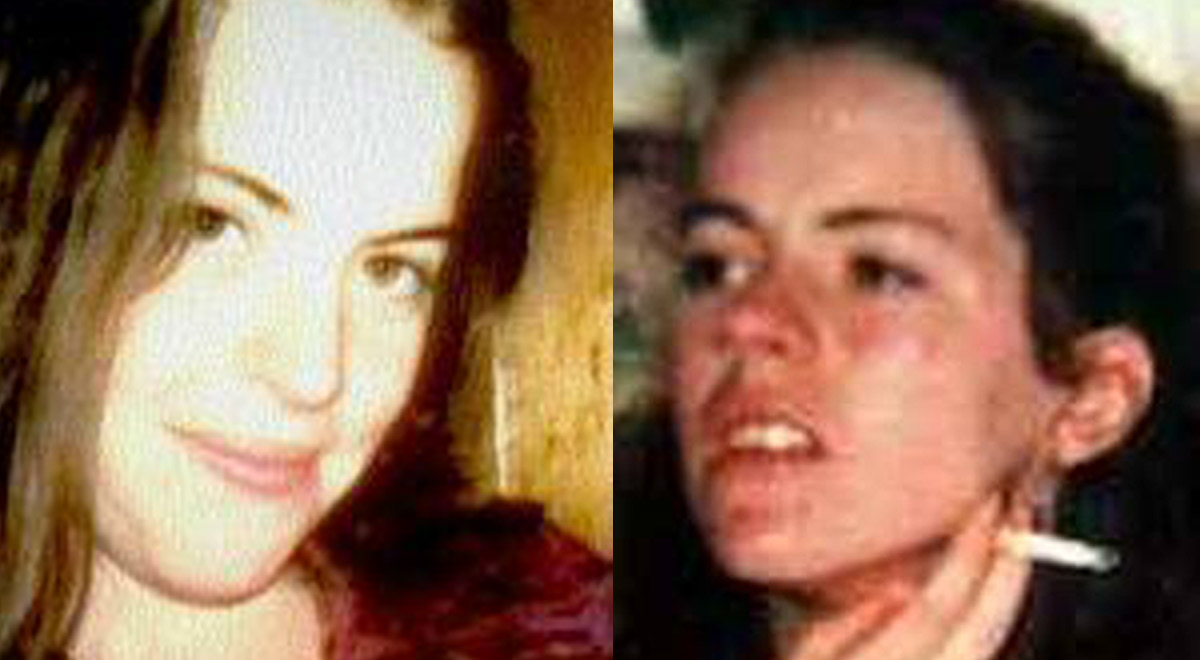
Fiona Sinnott, a 19-year-old mother from County Wexford, disappeared on 8 February 1998 after leaving a pub in Broadway.
She has not been seen since.
Broadway
It was Sunday, 8 February 1998. The song Doctor Jones by Aqua was at the top of the singles charts, and the film Titanic was setting box office records. The Winter Olympics had started in Japan, and news about an earthquake in Afghanistan was receiving worldwide media attention.
Locally, the Wexford People was reporting on the concerns of poultry farmers in County Wexford, who were worried about the spread of the Newcastle virus, a contagious disease that had already killed more than one million birds in Northern Ireland.
In the small village of Broadway, County Wexford, Fiona Sinnott was sitting with her friends in a local pub called Butlers. According to the book Missing, Presumed by retired detective sergeant Alan Bailey, she spent the evening chatting and joking with her friends about a night out they had enjoyed the previous Friday.
Her ex-partner, Sean Carroll, was also at the pub. He was sitting at the bar alone, smoking and having a pint.
At some point in the evening, Sinnott called her brother and asked him to join her at Butlers. He declined, having just returned home from work.
When the night came to a close, Sinnott said goodbye to her friends and left to take the short walk back to the house she had been renting by herself in Ballyhitt. At 12.10 am, she left the bar clutching two packets of peanuts. Carroll, who was the father of their 11-month-old daughter, decided to accompany her home.
This was the last time Sinnott was seen in public.

Reported missing
Sinnott was not reported missing until 18 February 1998. She was an independent young woman who had previously left home to visit Cork for a few days. She lived 16 km from her family home and mobile phones were uncommon at the time. Communication occurred through landline phones, written correspondence, and face-to-face conversations. It was common for family members to go several days without contact.
Every Friday, Sinnott would get a bus into Wexford Town to meet her family for coffee. When she failed to show up for the second week in a row, her family began to worry. As the days went by, it became clear that something was wrong.
On 18 February, Sinnott’s father contacted Kilmore garda station to report his daughter missing. Gardaí launched a full-scale missing persons investigation.
Sean Carroll
In Missing, Presumed, Bailey described how the Gardaí contacted Sinnott’s ex-partner after she was reported missing. Because Sinnott and Sean Carroll had left Butlers pub at the same time, Gardaí identified him as one of the first people they should speak with.
During his conversation with investigators, Carroll told them he had walked Sinnott back to her house in Ballyhitt and slept on her couch. She had gone straight to bed after complaining about pains in her arm and upper body.

The next morning, Carroll said he walked into Sinnott’s bedroom and saw that she was awake. According to him, Sinnott told him she was still in pain and intended to hitch a lift to her GP later that day. Because she said she had no money, Carroll told Gardaí he had given her £3. He then left the house and took a lift from his mother, who was waiting in a car outside. Carroll and his mother drove back to their family home, where Sinnott’s daughter Emma had been staying.
This was the last date on which anyone reported seeing Sinnott alive.
Before her disappearance, Sinnott had suffered several serious assaults at the hands of an ex-partner. She was hospitalised several times as a result of these attacks. Sinnott discharged herself and did not press charges. The first time she was brought to Wexford General Hospital, it was because she had suffered bruising to her face. On another occasion, she had bite marks on her legs and had been beaten around the head and back.
In 1996, Gardaí were called to a house close to Rosslare Harbour. When they arrived, they found another woman comforting Sinnott on the street. Inside the house, they came across the man who had allegedly threatened her with a knife. He had been drinking and was asleep on the couch. Sinnott collected her belongings and left. No charges were brought. Gardaí also heard details of another serious assault, which Sinnott had told several people about. According to Gardaí, it was a “very serious attack” that would have seen the perpetrator facing up to life imprisonment.

The investigation
During the investigation, Gardaí discovered that Sinnott did not see a doctor that day. There was no record of her having attended her GP in Broadway. They also failed to find any evidence that she had been hitchhiking.
Gardaí ruled out a theory that she had left the country with a Welsh trucker. Two nights before Sinnott disappeared, she had spent the night with a trucker in his cab. Although the idea of a large truck driving down the narrow roads of Ballyhitt was met with scepticism, Gardaí still had to pursue it. After they made contact with the trucker, he agreed to return to Ireland to be interviewed. His alibi was confirmed, as he was able to prove he had been driving on the continent when Sinnott went missing.
During a forensic examination of Sinnott’s house, Gardaí noticed it had been stripped bare of many of her personal belongings. It was spotlessly clean, which they considered unusual for her.
According to Bailey, who served as National Co-ordinator for the specialist garda task force Operation TRACE, there was a “complete absence of clothing and other personal items indicating that a teenage girl and her 11-month-old daughter were actually living there.”
Later, one local recalled how he had seen more than a dozen black refuse bags lined up outside the property.

Black bags
As news of Sinnott’s disappearance continued to spread, a local farmer approached Gardaí with news that he had discovered several black bags in the corner of one of his fields. Inside the bags, he found several items and documents that had Sinnott’s name written on them.
The farmer had set fire to the bags, as he thought it was just another case of illegal dumping. The correspondence he discovered bore a George’s Street address, where Sinnott had previously rented an apartment with her ex-partner. This address did not correspond with the address listed in the missing-person appeals.
Gardaí began to suspect somebody was trying to mislead them into thinking Sinnott had run away.
The search
At the time of her disappearance, Sinnott’s daughter Emma was about to celebrate her first birthday. According to her friends and family, Sinnott was looking forward to this, as well as her sister’s upcoming 21st birthday. She even had plans to go to Waterford to buy her sister a birthday present.
Her family and investigators believe Sinnott did not leave voluntarily.

From the outset, detectives have been convinced that Sinnott’s body is buried somewhere in the south of County Wexford. Her family shared this opinion:
I believe she’s not far. She’s closer than what we might think. You could be driving by her on the road all the time.
In June 1998, the nearby lake in Lady’s Island was drained, with Gardaí keeping a 24-hour floodlit watch. The operation lasted a month. and the entire lake was searched, but no trace of Sinnott was found.
Searches at other lakes and suggested burial sites also yielded no results.
In 2001, a man suspected of involvement in disposing of Sinnott’s body died from a suspected drug overdose. According to Bailey, the man had been finding it increasingly difficult to live with the guilt of having been involved. He could not provide Gardaí with an anonymous tip-off because only three people knew her exact whereabouts. Telling somebody, he said, would be tantamount to signing his own death warrant.

Arrests
On 16 September 2005, Gardaí announced they were treating the case as a murder investigation. Earlier that day, at around 7 am, they arrested the prime suspect in the murder of Fiona Sinnott at his home and detained him under Section 4 of the Criminal Justice Act.
In the days leading up to his arrest, five other people had been detained by Gardaí on suspicion of withholding information.
Over three days, six people in total were arrested: the prime suspect, the suspect’s mother, his sister, his sister’s boyfriend, his ex-girlfriend, and a male friend.
After questioning, Gardaí released them and submitted files outlining their suspected involvement to the Director of Public Prosecutions. No charges were brought in relation to the 2005 arrests.
These arrests followed vital information that they received from a woman who was known to the suspect.
Millpond Cross
During the investigation, one person came forward to say they had heard a woman screaming in the Millpond Cross area on the night Sinnott left Butlers pub. Another motorist stated they had seen a couple who appeared to be arguing at the entrance to a quarry.
These reports have never been proven, nor have they ever been successfully linked to Sinnott’s disappearance.
Many believe several people in the Wexford area know what happened to Sinnott. According to Bailey, there have been persistent rumours that local youths were involved in the cover-up of her murder. Reports have also suggested that people have maintained their silence because they fear the suspect in question.
Developments in the investigation
Sinnott’s case is often mentioned whenever the topic of the “vanishing triangle” is discussed. The term refers to the disappearances of several women during the 1990s, all of which occurred in the same geographical region in Ireland. These include Fiona Sinnott, Fiona Pender, Annie McCarrick, Eva Brennan, Imelda Keenan, JoJo Dollard, Ciara Breen, and Deirdre Jacob. It has been theorised that a serial killer may have been involved in some of the disappearances, though the suspect in Sinnott’s case is a man who was well known to her.
In his book, Bailey detailed how Operation TRACE made several recommendations to Wexford Gardaí about those involved in Sinnott’s case, but they were never implemented.
In July 2006, Gardaí carried out a search of a lane outside St David’s Church in Mulrankin. The search, which failed to find anything, occurred after the site was identified by a clairvoyant. The clairvoyant had stated that Sinnott was killed and her body buried under a septic tank.
A human skull was found at Katt’s Strand in 2007, but investigators soon learned that it belonged to an older and smaller woman.
On 12 September 2008, a memorial plaque for Sinnott was stolen from a cemetery in Our Lady’s Island in County Wexford. The marble plaque, which had been cemented into the wall, was removed the night before it was due to be unveiled. Bailey said it was “almost certainly the case” that the suspect in Sinnott’s disappearance was involved with the removal of the plaque.
In April 2015, what was believed to be human hair was discovered at a dig site in County Wexford. DNA testing later disproved this. In August 2015, Sinnott’s family revealed they had identified two sites in the South East and were waiting for the go-ahead from Operation TRACE to search them. Joe Blake from Trace Missing Persons Ireland has assisted with these digs. He uses specially trained cadaver dogs to search for forensic evidence and human remains.
In April 2017, Gardaí renewed their appeal for help locating Sinnott. They made a fresh appeal on RTÉ’s Crimecall. Gardaí also revealed they were due to carry out a fresh forensic examination of Sinnott’s home in Ballyhitt. According to Dr Dorothy Ramsbottom, recent advances in technology allow investigators to locate and generate DNA profiles from stains.
In December 2017, The Irish Sun reported that the chief suspect in Sinnott’s murder had fled to another country to complicate any future extradition bids. It reported that the suspect had been living in the UK and Spain before recently moving to another country. It did not name the country.
Impact on the family
In 2004, Sinnott’s father, Pat Sinnott, passed away, having never discovered what had happened to his daughter. His family say he never recovered from her disappearance. Before his death, he used to wait at the front gate in the hope that she would one day return home. On his deathbed, he told his sons:
Don’t stop searching for her. Find her.
In January 2006, the Sunday Mirror reported that a man spat at Sinnott’s family during a search for her body. The man also laughed at her grieving relatives as they awaited the results of the dig. The operation had been carried out at a field in Killinick.
In June 2017, Sinnott’s sister Caroline Sinnott passed away after a short illness. She was 47. Caroline never gave up looking for her younger sister and had frequently appealed to the public for new information.
In an interview with the Irish Examiner, Sinnott’s family expressed their belief that two people besides the main suspect had information about her whereabouts, but they believe these people fear him. They also stated their belief that Sinnott’s body is somewhere in County Wexford.
Public appeals and media coverage
In the years that followed, the case continued to attract public attention. In July 2018, Virgin Media Television (formerly TV3) announced it would be airing a documentary about the missing Wexford woman. The documentary, called Getting Away with Murder, aired in autumn 2018.
If you have information about the disappearance of Fiona Sinnott, please contact any garda station or phone the garda confidential phoneline on 1800 666111.
References: Bailey, Alan (1 December 2014). Missing, Presumed. Liberties Press.