Are you planning a trip to Wexford? Are you struggling to understand the guy in your college class? Is the new employee from the Model County speaking in strange tongues?
If the answer is yes to any of the above, then you’ve found the right place. Below is an exhaustive guide to Wexford’s most common slang phrases.
Though
You will often hear Wexford people place the word “though” at the end of their sentences, typically after a statement or opinion. It is pronounced with a strong D, similar to “dough.”

Alright
When a Wexford person says “alright” to you, they are not asking a question. It is simply a greeting, equivalent to “Hi.”
Sahn
In Wexford Town, you might hear the word “son” pronounced as “sahn” or “saaahn.” Examples include “How are you, son?” and “Alright son?”
This is an informal greeting typically used between males who know each other and would not be appropriate in formal settings. In other words, don’t start calling your boss “sahn.”

Quare
In Wexford, “quare” is used in place of “very.” For example, you might hear someone say, “It’s quare warm out today” or “That curry was quare nice.”
Quare is one of the few remaining words from the Yola dialect, a form of English that evolved from Middle English and was spoken in the southern half of County Wexford until the middle of the 19th century. In Yola, “quare” meant “very.”

Hun
“Hun” is a common greeting in Wexford. Examples include “How are you, hun?” and “Do you want salt and vinegar, hun?” It is unrelated to the nomadic tribe known as the Huns.
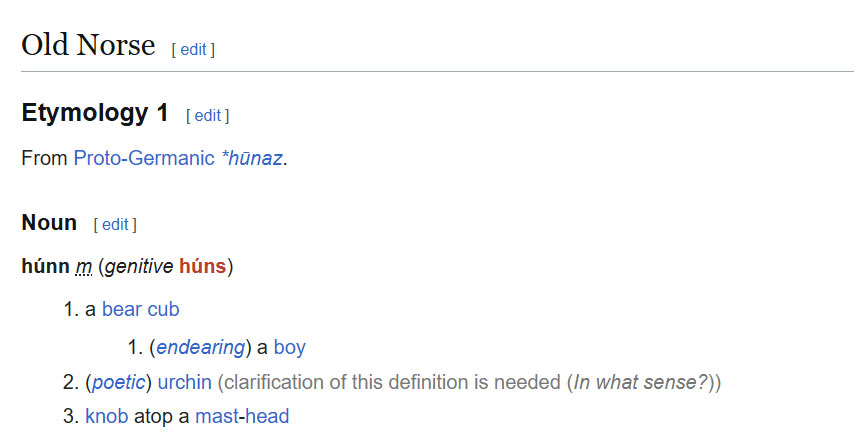
While the consensus is that “hun” is short for “honey” or “hunny,” local historian Billy Colfer suggested in 2005 that the word may have originated from Wexford’s Viking heritage. He told the Wexford Historical Society that he had found “hun” in a genealogical dictionary, which stated that it was of Norse origin and meant “young bear,” translating roughly to “fine strong fellow.”

Definitions from several websites support this. According to Wiktionary, the Old Norse word “húnn” meant bear cub, but was used as an endearing term for a boy.
Lethal / Deadly
In Wexford, “lethal” and “deadly” are used to describe things that are good. Examples include “That burger was some lethal, though” and “This TV show is quare deadly.” The word “lethal” is often pronounced as “leed-al” or “lee-al.”
Lort
“Lort” is a pronunciation variant of “Lord” used to express shock or surprise.
The word may be another remnant of Wexford’s Viking heritage. In Danish, which is descended from Old Norse, “lort” means “sh*t.”

Skin
“Skin” is used as a greeting similar to “sahn.” For example, “Alright skin!”

Some
The word “some” is often used in place of “very.”
Examples include “That movie was some good” and “It was some cold out last night.” Wexford people may use either “some” or “quare” instead of “very.”
Smell of Rage
The phrase “smell of rage” translates to “You must be very annoyed” and is typically used in a teasing manner.

Your Wan
The phrase “Your One” is pronounced as “Your Wan” and is used to refer to a female of any age.
For example, “Look at your wan over there” means “Look at the woman over there.” Wexford people also use “Young Wan” to describe any female younger than themselves.
Smoothing a dog
People from the town do not “pet” a dog, they “smooth it.”
Brudder
In Wexford Town, the word “brother” is pronounced with two D’s instead of a “th.”

Dirt / Muck
When something is of poor quality, Wexford people describe it as “dirt” or “muck.” For example, “That movie is dirt” means the movie is of poor quality, and “He is muck at football” means he is very poor at football.
The words “dirt” and “muck” have Norse origins. “Dirt” comes from the Old Norse word “drit,” which was specifically used to describe excrement or faeces. “Muck” is derived from the Old Norse word “myki,” which referred to cow dung. Wexford Town was founded by Vikings in 800 AD.